June 1st – July 10th 2026
Course Description
Greek political theory addressed life in small city-states, but the vast size of the Roman Empire presented political thought with new problems and questions—many of particular relevance to our own vast modern political communities. Can a republic thrive and survive as it expands? The transformation of city-states into empires also shaped the kinds of ideals and human beings that could develop within them. What vices and virtues are characteristic of a republic, and which of an empire? And which aspects of Rome’s development still speak to us today?
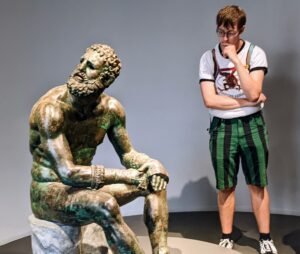
We will consider these questions through a variety of authors with very different perspectives on Rome. We begin with a few short selections from Thucydides’ fundamental reflection on the meaning of empire, then turn to Alexander’s motives in creating a world empire that rendered the city-state irrelevant. From there, we will study Polybius and Livy’s histories of republican Rome, followed by Vergil’s Aeneid, the great epic on the prehistory of the Roman Empire. We will then turn to St. Augustine’s radically critical view of Roman history and political theory in The City of God. The program concludes with texts that reassessed Rome at the dawn of modernity: Niccolò Machiavelli’s Discourses on Livy and the Roman plays of William Shakespeare.
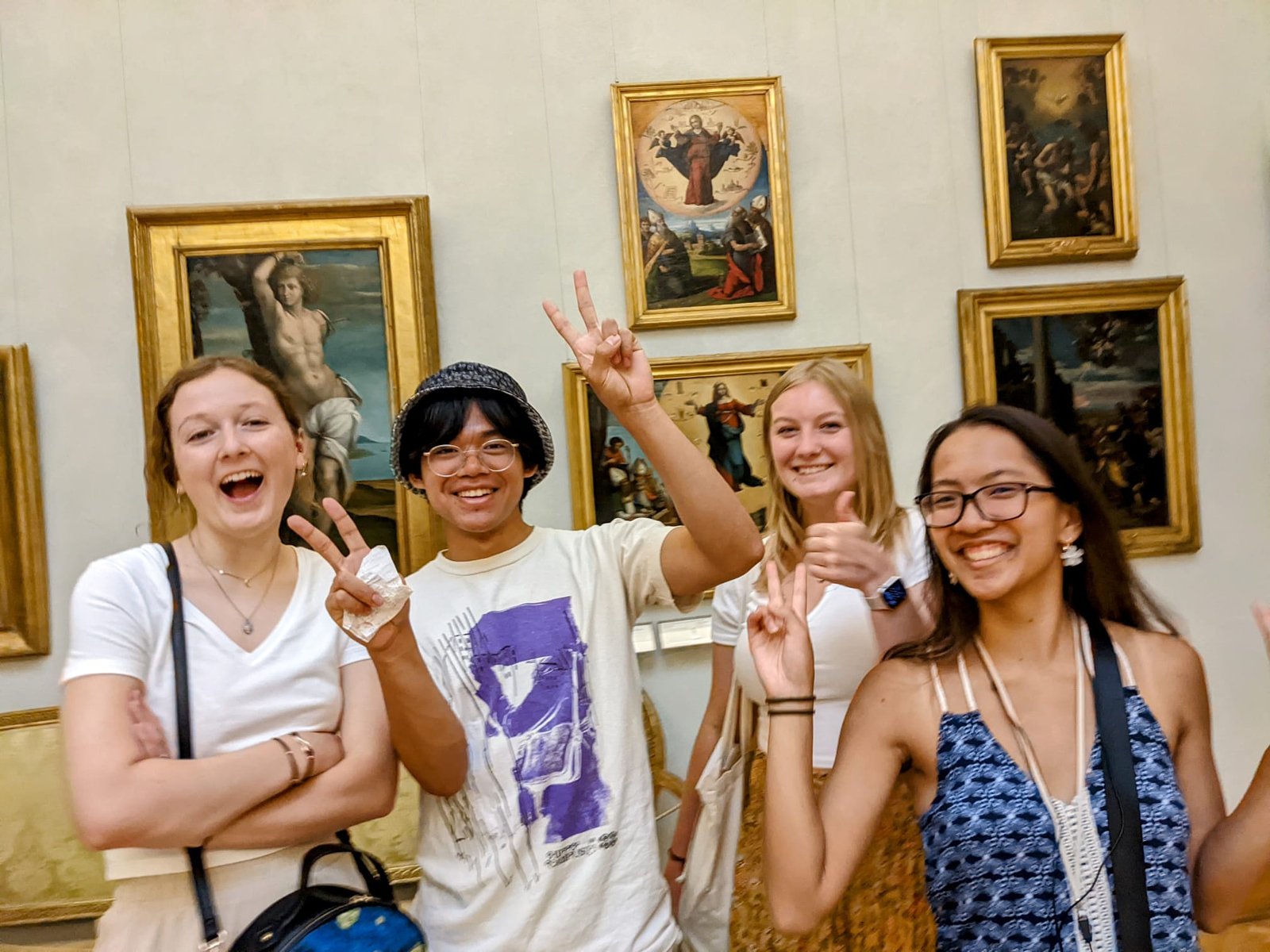
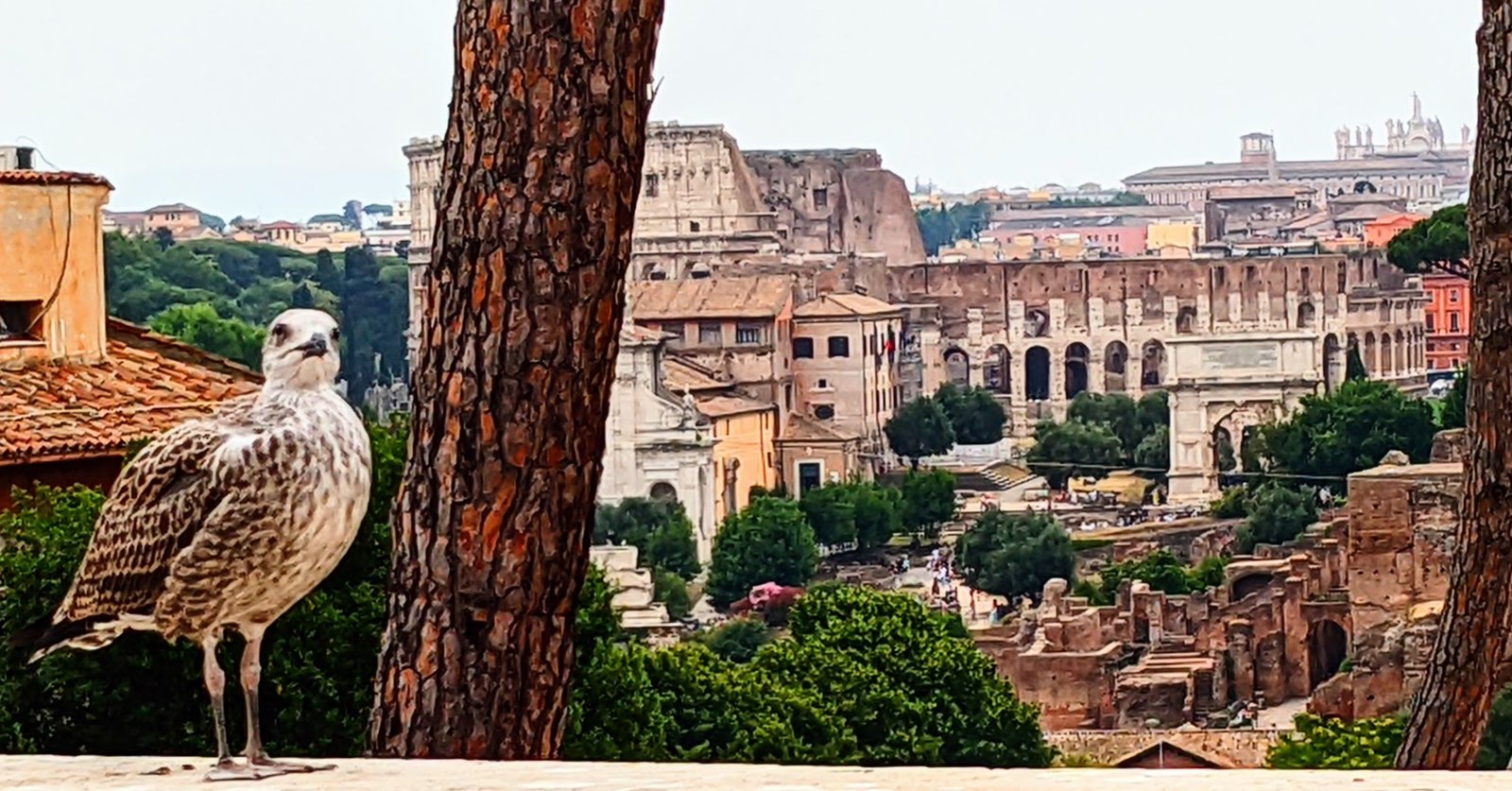
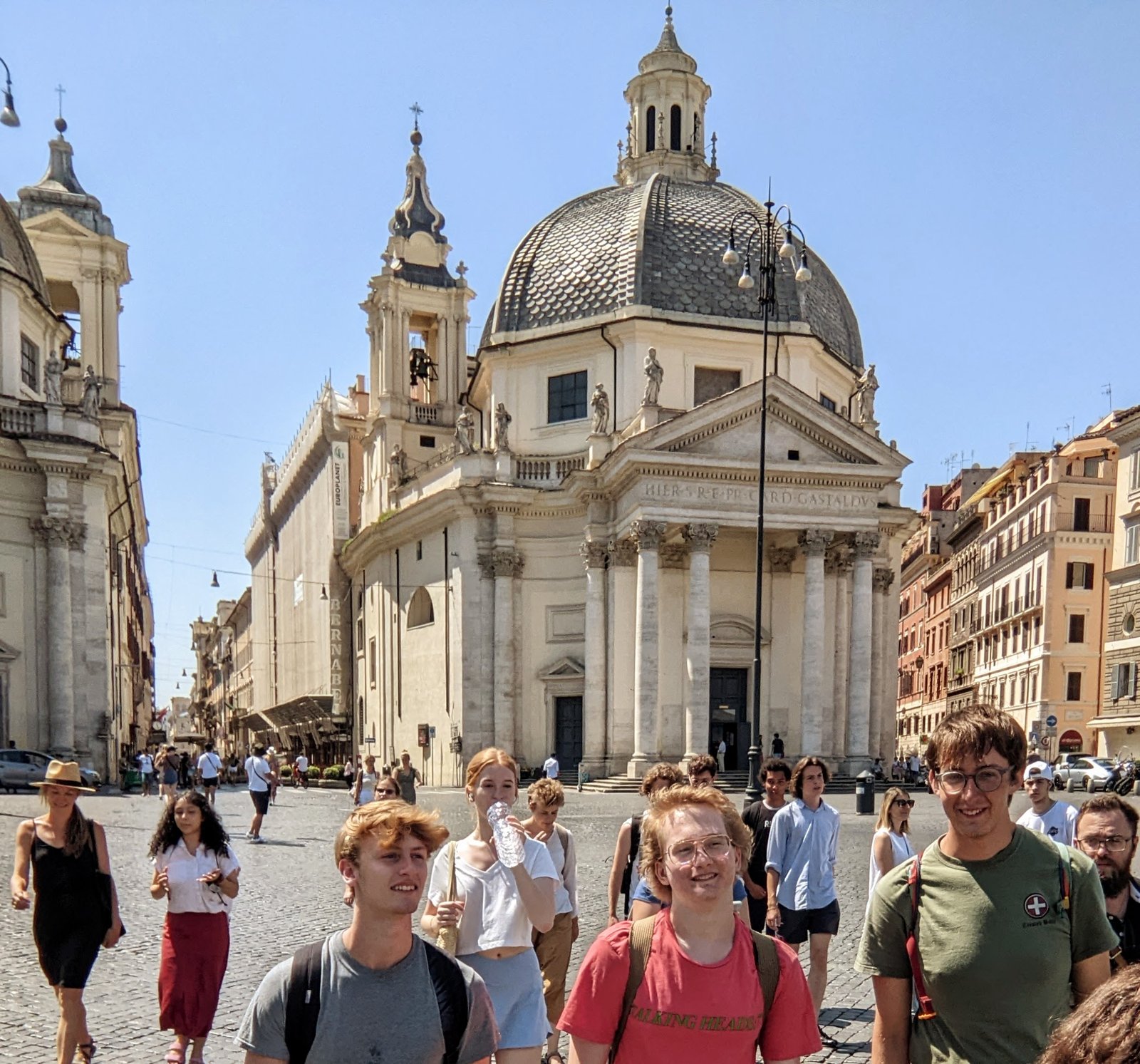
Rome itself provides a fascinating backdrop for all these readings. It is, of course, the direct setting for the ancient histories and Shakespeare’s plays, but it also lies at the heart of Machiavelli’s understanding of his own Italian context. More broadly, with the right background and guidance (which RILA provides through lectures and tours), walking through Rome does not simply confront you with a heap of historical details—it challenges you to consider alternative ways of thinking about the structure and purpose of political life. The city itself powerfully juxtaposes ancient and modern in a concrete way, an experience that can transform how you read the texts. In addition, many works of art in Rome, both ancient and modern, illuminate the larger themes of the course and present them as living questions.
top of page
Course dates and format
- Course Duration: 6 weeks
- Start: Monday, June 1
- End: Friday, July 10
- Arrival in Rome: Saturday, May 30 by 7:00 p.m.
- Check-out: Saturday, July 11 by 10:00 a.m.
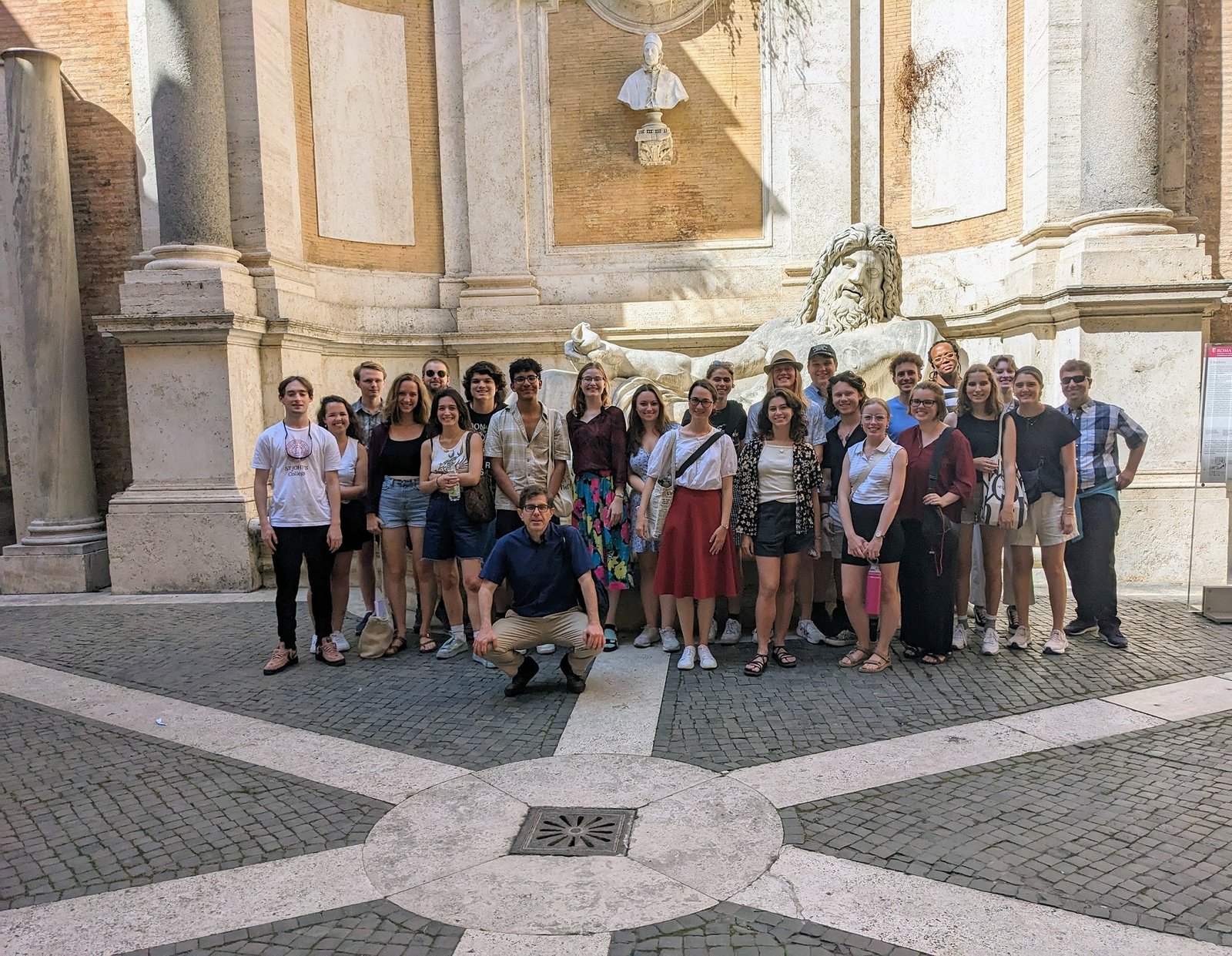
Classes are structured as seminars—discussion-based sessions that meet in small groups led by a faculty member. This format allows for a deeper exploration of the texts and issues studied, as well as a high level of student participation. Seminars meet for one hour and fifteen minutes, four days per week, in the morning.
Once or twice a week, before the morning seminar, students will receive a brief pre-visit presentation designed to connect the issues under discussion with the site to be visited in Rome that day. Informal discussion may follow immediately or later, while on site. Tours of Rome take place after class, two or three times a week.
 Once a week, on the day when there are no classes, students will participate in a longer city tour or, alternatively, a full-day trip outside of Rome. The program includes two full-day excursions to sites of artistic and historical importance (e.g., Naples, Orvieto, Tivoli).
Weekends are free, with the exception of the weekend dedicated to the optional trip to Siena.
The program also includes at least one formal guest lecture related to the course theme.
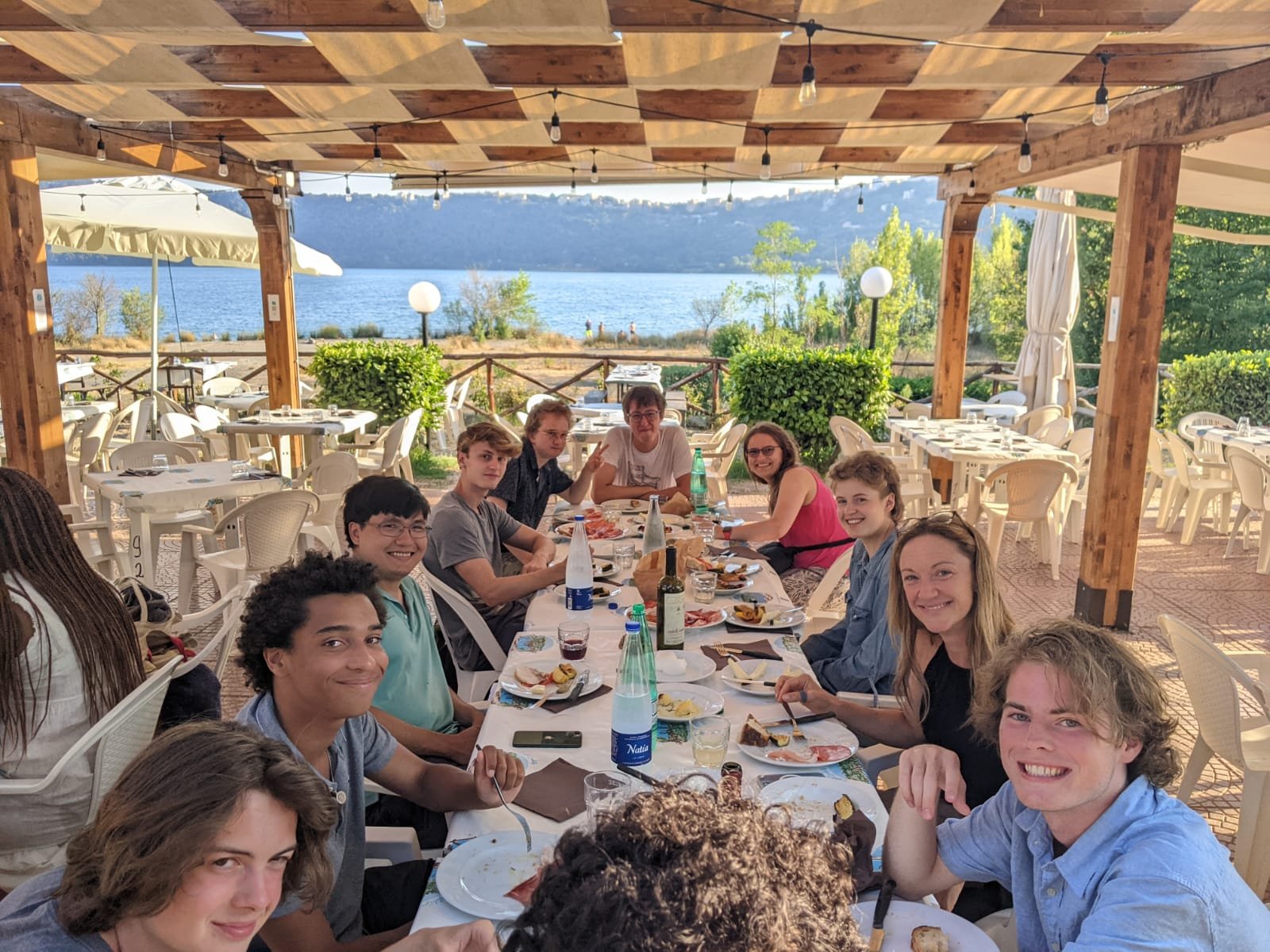
Excursions
The class will go on several excursions each week. At least two of these will take us outside of Rome—one to Orvieto and another to Tivoli. An optional weekend excursion will take us to Siena. Students explore sites together with the seminar leaders and RILA’s academic director, Gabe Pihas. On some tours, an art historian or classicist will also join the group.
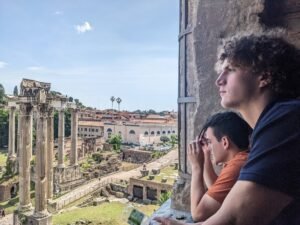
The introductory week of excursions is our fullest. We will visit the Pantheon and the Gesù, where we will explore competing pagan and Christian cosmologies; the Palazzo Altemps, to examine the development of Greek art; the Forum, the religious and political center of ancient Rome; and the Palatine Hill above the Forum, where emperors built their palaces. We will also study churches that serve as palimpsests, where medieval builders constructed new structures on pagan foundations, such as S. Cosma e Damiano and S. Clemente. Finally, we will visit the major churches of S. Ignazio and Santa Maria sopra Minerva, both connected to the life of Galileo in Rome.
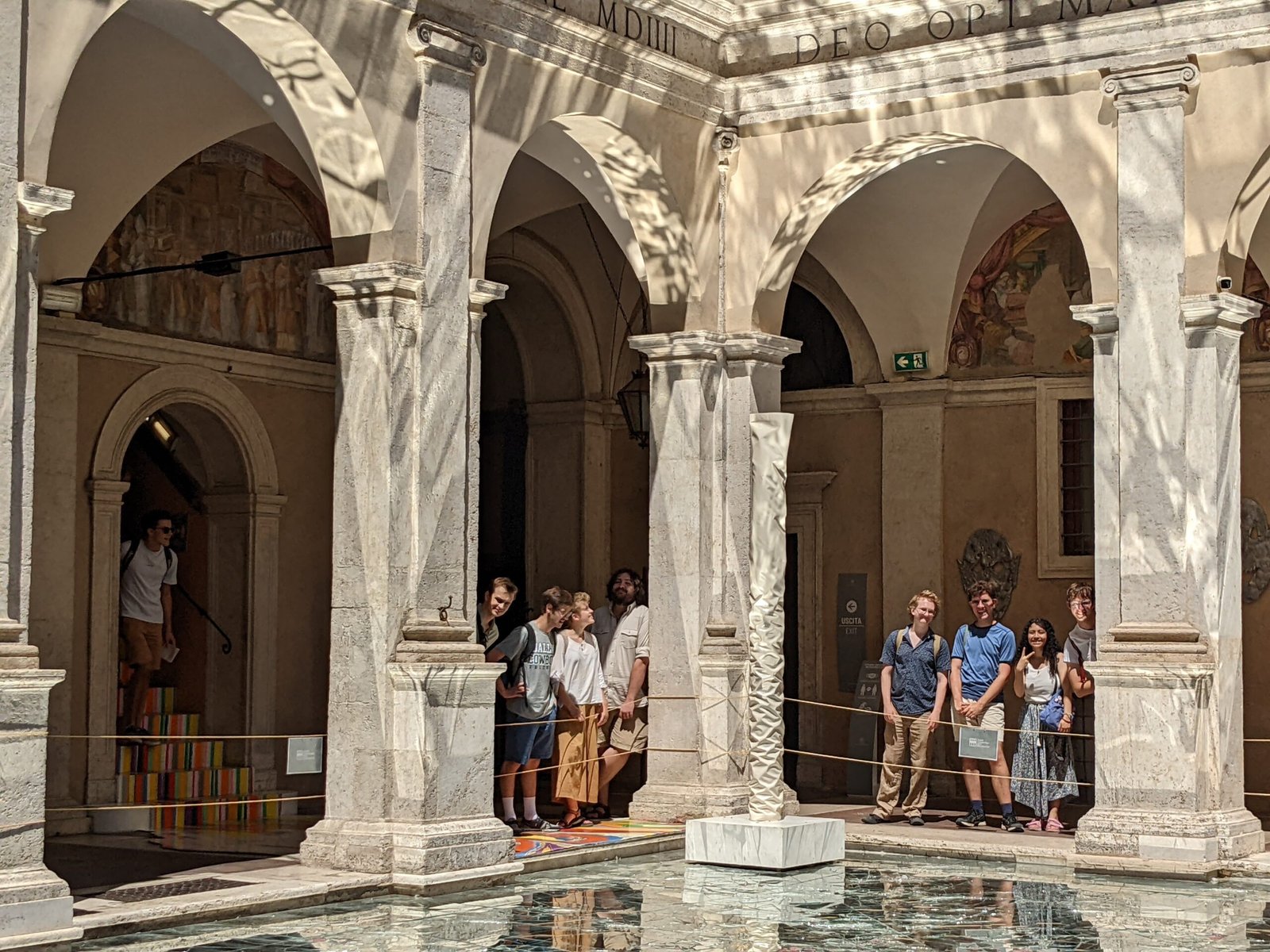
The second week of excursions will parallel our readings of Plutarch, Polybius, and Livy. We will visit the Capitoline, where the Rome described in Livy’s history first took shape. There, we will study Michelangelo’s architecture and his Renaissance synthesis of Classical and Christian traditions. At the Capitoline Museums, we will view an impressive collection of classical sculpture alongside Renaissance and Baroque painting, including a fresco cycle dedicated to the chapters of Livy we are studying. Our exploration of Michelangelo’s architecture will continue at his Church of Santa Maria degli Angeli e Martiri, built directly upon the ruins of the Baths of Diocletian. We will also study Bernini’s sculptural and architectural work in the Cornaro Chapel, featuring the famous image of St. Teresa in ecstasy. Back in Rome, we will hear a lecture on the politics and art of Roman urban growth, in preparation for our exploration of Michelangelo’s reshaping of Rome. Finally, we will visit the emperor Hadrian’s villa at Tivoli.
In the third week, we will visit the Vatican and St. Peter’s Basilica. The vast collections of classical, medieval, Renaissance, and Baroque art will be of central importance for our reflections on the course theme as a whole. The Vatican will also help us consider the significance of the Church as the heir to the Roman Empire. In addition, we will visit a series of ancient and medieval churches—Santa Costanza, Santa Maria Maggiore, Santa Pudenziana, and Santa Prassede—in which ancient art transformed into Christian art, raising theological controversies about iconoclasm that led to major political changes in Europe and the Middle East. Our readings will include Vergil’s Aeneid, Augustus’ great political epic. We will pair this with a visit to the Ara Pacis, the most important symbol of Augustus’ political achievement, and explore the private side of Roman life in beautifully frescoed houses discovered on the Celio Hill.
As we move from reading Vergil to Augustine in the fourth week, we will reflect on the politics of Constantine and his conversion of the pagan Roman Empire into a Christian one. We will visit the Arch of Constantine, dedicated during his lifetime, as well as the medieval fresco cycle in Santi Quattro Coronati that depicts his donation of political power to the Church. We will also visit the Lateran, established by Constantine, which contains extensive artworks devoted to the rise and fall of this political doctrine. At Santa Sabina—the ancient church where Thomas Aquinas conceived and wrote his Summa Theologica—we will reflect on the intellectual heritage of Christian Rome. Finally, we will visit the churches of Trastevere painted by Dante’s contemporary Pietro Cavallini, whose work stands at the origins of Renaissance painting.
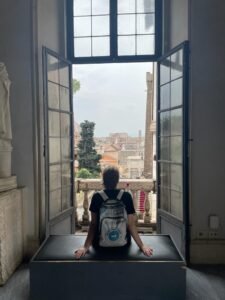
In the fifth week, as our readings turn to Machiavelli, we will focus on questions of modernity. We will study Caravaggio’s paintings in Santa Maria del Popolo and San Luigi dei Francesi, and visit the Galleria Borghese, which contains an extensive collection of Caravaggio’s works. At the Borghese, we will also examine Bernini’s revolutionary sculptures, which redefined the possibilities of art, as well as other masterpieces of Renaissance painting, including Titian’s Sacred and Profane Love, which is central to the theme of our course. We will also take a trip to Orvieto, a former Papal residence and a center of study for Aquinas and the medieval Dominican order.
In the sixth week, our readings of Shakespeare will guide us as we reflect on the relation between ancient and modern. We will study Borromini’s innovative ways of presenting infinity in his architecture and the modern reinterpretation of the sacred that his churches suggest. We will visit his major works: Sant’Ivo, San Carlo alle Quattro Fontane, and Sant’Agnese in Agone. Finally, we will visit the Palazzo Barberini, built by Borromini and Bernini, now an important museum of Renaissance and Baroque art, offering a rich conclusion to our exploration of Rome’s artistic and intellectual heritage.
Optional trip
All students and faculty in both RILA summer classes will be invited on a non-required overnight trip to Siena.
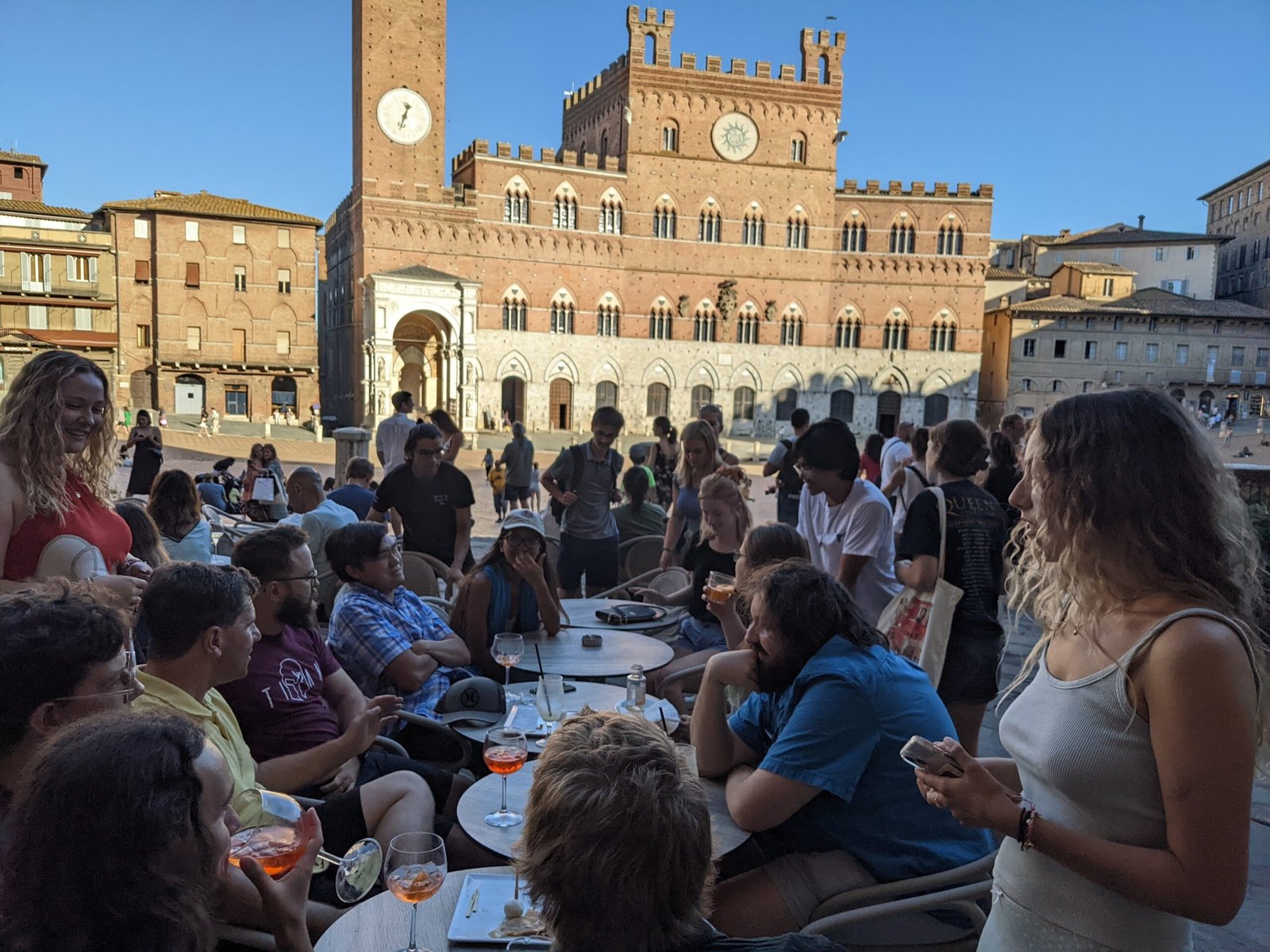
Siena is one of the most beautiful cities in Italy, as well as one of the most important centers of sacred art. The sheer quantity of significant works in this small city is vast and overwhelming. The Sienese style is of particular interest for our theme of beauty and the sacred, since it offers a more mystical version of the momentous developments in Italian late medieval and Renaissance art. The work of Duccio, in particular, is both historically important and highly relevant to the theme of our course. In Siena, we will also visit the Palazzo Pubblico, which marked the beginning of a new development in secular public life in the late Middle Ages: the birth of the commune and the decline of the feudal order. Within this historic building are Lorenzetti’s Aristotle-inspired frescoes of good and bad government. These famous frescoes alone are worth the trip for readers of Aristotle’s Politics, and they hold particular interest in connection with our Dante readings.
The optional trip requires separate payment for the bus and for an inexpensive hotel. Details will be made available later, but we ensure that all optional trips are kept very affordable. In past years, nearly all participants in all RILA courses have chosen to join these optional excursions.
top of page
Readings
Thucydides, History of the Peloponnesian War (selections). 
Plutarch, Life of Alexander.
Polybius, The Rise of the Roman Empire (selections).
Livy, Ab Urbe Condita (selections).
Virgil, Aeneid (selections).
Augustine, City of God (selections).
Machiavelli, Discourses on Livy (selections).
Shakespeare, Julius Caesar; Antony and Cleopatra; Coriolanus.
top of page
Seminar Faculty
Erik Dempsey, University of Texas at Austin
Erik Dempsey teaches at the University of Texas at Austin, where he is a Lecturer in the Government Department and serves as Assistant Director for the Thomas Jefferson Center for the Study of Core Texts and Ideas. He has a BA from St. John’s College in Annapolis, Maryland, and a PhD in political science from Boston College, where he specialized in classical political philosophy.
Gabriel Pihas, Academic director of RILA
Gabriel Pihas is a former student and tutor at St. John’s College in Annapolis, Maryland. He got his PhD. at the University of Chicago, and before that his M.A. at Yale. In 2001-2002 he was a fellow at the American Academy in Rome in Italian literature, and in 2003-2005 an assistant professor at the European College of Liberal Arts in Berlin, Germany. In addition to his specialty in renaissance literature, he has strong interests in ancient philosophy and in twentieth century continental philosophy. He taught at St. John’s College, Annapolis, from 2006 to 2012. And from 2012 to 2017 at St. Mary’s College in Moraga, California. In 2008 Mr. Pihas founded the Rome Institute of Liberal Arts, for which he has served as academic director ever since.
Lecture
TBD
…
top of page
Art Historians
Gianpaolo Castelli
 Gianpaolo Castelli currently works in the Office for Museums, Libraries, and Archives at the Lazio Regional Department of Culture, where he took up a post as art historian in September 2007. He has worked for many years in publishing as well as in educational projects for students and adults aimed at appreciating the cultural heritage of Italy. After receiving his degree in Classics in 1995, he went on to specialize in Etruscan, Greek and Roman Art history. More recently he received a masters degree in Paleography and Archival Science, and is currently researching late Medieval and early Renaissance Rome’s cultural milieu.
Teresa Calvano
 Art historian, President Emeritus of the Italian National Association of Art History Teachers (ANISA), President from 2001 to 2008. In 1977-78 she had a fellowship at the Cultural Heritage Department of Unesco, in Paris. From 1980 to 2003, she has taught art history in Italian “licei”. From 2006 to 2008 she has taught contemporary art at the University of Rome “Roma Tre”, teaching special courses for future art history teachers. Professor Calvano has published on numerous subjects of modern and contemporary art history, including women artists. She is also an expert on art teaching pedagogy and has published several articles on that subject.
Italian Language Course
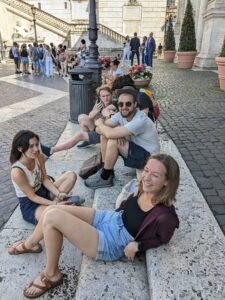
Although RILA students are not required to know any Italian, and all readings will be done in English, we encourage you to sign up for an Italian language class, as it may make your experience in Rome more meaningful and engaging. For this reason, RILA organizes an optional basic Italian course for its students. Classes take place twice a week, with lessons varying from 60 to 90 minutes depending on the size of the group. The course is designed to provide students with a basic knowledge of Italian grammar and vocabulary, focusing on immediate language needs in daily life, and emphasizing the development of listening, comprehension, and speaking skills.
For information on the course cost, please refer to the Admissions page.